What if one of the greatest barriers to youth prevention isn't a lack of programs, resources, or awareness?
What if it's our belief that prevention is someone else's responsibility?
Across America, young people are navigating pressures that many adults struggle to fully understand.
Drugs and alcohol remain serious concerns. Bullying can follow a child home through a phone. Social media creates constant opportunities for comparison, criticism, and peer pressure. Trauma, anxiety, depression, and suicidal thoughts may remain hidden behind good grades, athletic achievements, or an outward appearance of happiness.
The research reinforces the urgency.
According to the CDC’s 2023 Youth Risk Behavior Survey, nearly 40% of high school students reported persistent feelings of sadness or hopelessness, and approximately one in five seriously considered attempting suicide during the previous year.
These aren’t simply national statistics.
They represent young people in our classrooms, neighborhoods, workplaces, athletic programs, and homes.
We cannot afford to wait until a young person is in crisis before deciding prevention matters.
For too long, prevention has been treated as a series of individual programs and awareness campaigns.
Should we invest in school assemblies or parent education? Billboards or social media campaigns? Mental health education or substance use prevention? Community programs or workplace training?
The answer should be:
YES. All of the Above.
YES to school assemblies that open important conversations.
YES to billboards and awareness campaigns that connect people with resources.
YES to strengthening parents and caregivers as trusted adults.
YES to workplaces recognizing their role in family and community well-being.
YES to coaches who teach healthy choices, belonging, and resilience.
YES to educating young people about digital safety, bullying, and online pressures.
And YES to creating environments where every young person feels seen, valued, and supported.
All of the Above
a philosophy that encourages communities to think comprehensively about prevention.
It doesn’t mean every strategy is equally effective or that every organization must do everything.
It means recognizing that young people experience overlapping risks and need multiple layers of evidence-informed protection.
These pressures don’t always produce obvious warning signs.
Sometimes young people withdraw. Sometimes they become angry or disengaged. Sometimes they continue performing well while struggling privately.
That’s why prevention must extend beyond identifying problems.
Sometimes young people withdraw. Sometimes they become angry or disengaged. Sometimes they continue performing well while struggling privately. That's why prevention must extend beyond identifying problems.
We must build protective relationships before problems emerge
The CDC’s research on school connectedness identifies supportive relationships with adults and peers as important protective factors associated with improved mental health and reduced risk behaviors.
Connection is not simply something that makes young people feel better.
Connection is prevention.
Every Adult Is Part of the Prevention Network
We often think prevention belongs to counselors, educators, healthcare professionals, or trained specialists.
Their expertise is essential.
But young people interact with many other adults every day.
Parents. Grandparents. Coaches. Employers. Bus drivers. Neighbors. Youth leaders. Family friends.
Every one of these adults has an opportunity to reinforce healthy choices, build trust, recognize concerns, and connect young people with support.
This doesn’t mean every adult must become a therapist.
It means every adult can become more prepared to respond.
Imagine communities where prevention education extends into workplaces, sports programs, neighborhood organizations, and everyday family conversations.
Imagine young people encountering trusted adults wherever they go.
We don't need every organization to do everything.
We need every organization to do something.
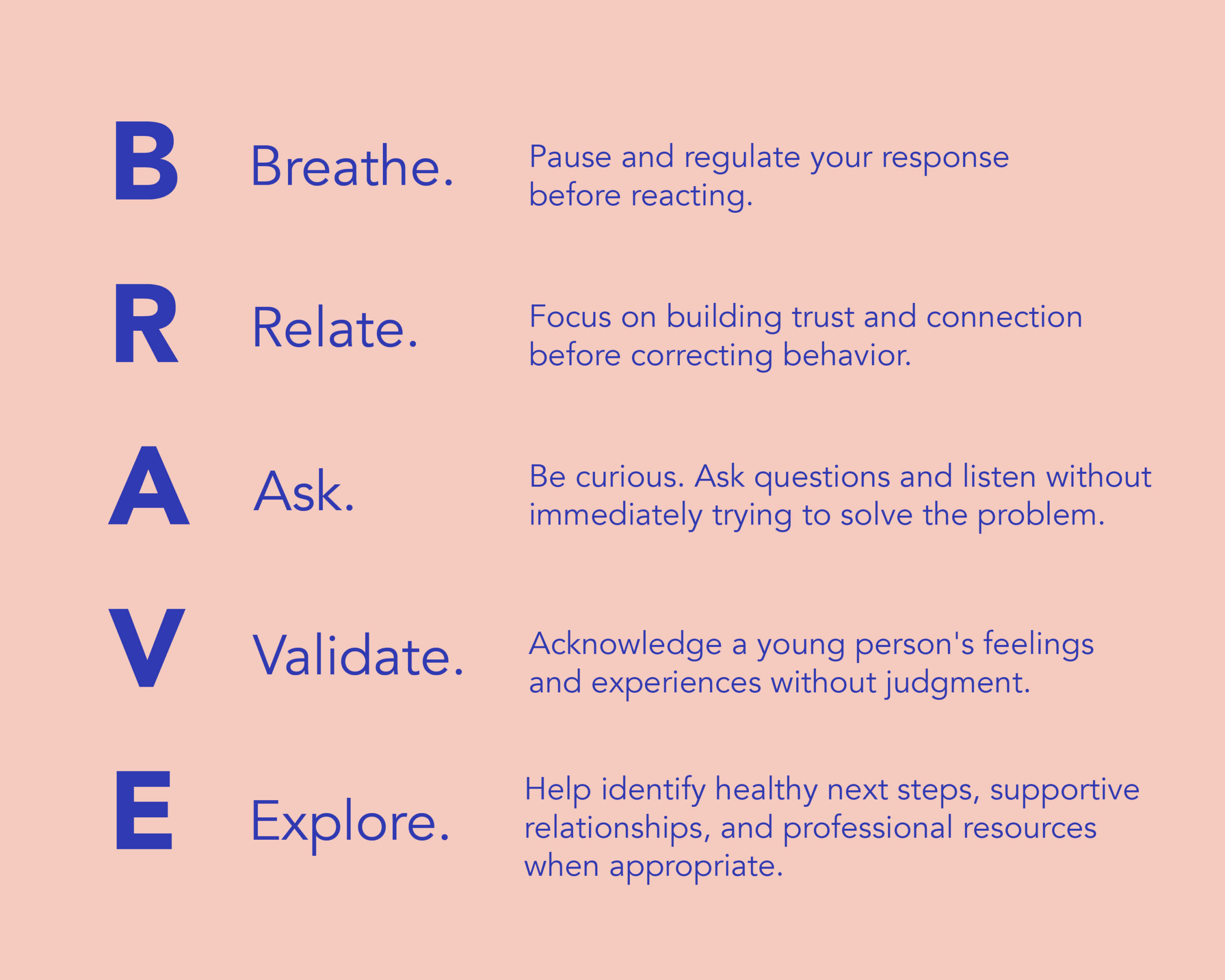
Start by Being BRAVE
Many adults want to help but worry about saying the wrong thing.
We hesitate to ask difficult questions. We fear overreacting. We don’t always know how to talk about substance use, suicide, bullying, or online experiences.
BRAVE offers a practical starting point.
BRAVE is a supportive communication framework, not a replacement for professional care or crisis intervention.
When a young person may be at risk of suicide or immediate harm, adults should ask directly about safety and connect them with qualified support.
But BRAVE gives adults a place to begin.
And sometimes beginning the conversation is the most important step.
But awareness cannot be the finish line.
A school assembly may introduce an important message. A billboard may remind someone that help exists. A social media campaign may spark a conversation.
The real opportunity comes when those messages are reinforced through supportive relationships, effective programs, accessible resources, and community involvement.
Encourage businesses to share prevention resources. Invite athletic programs to discuss peer pressure. Help parents develop communication skills. Encourage schools and community organizations to coordinate their efforts.
One Young Person. One Conversation. One Brave Adult.
We cannot eliminate every risk or difficult experience young people will encounter.
But we can build communities where support is easier to find, conversations happen sooner, and more adults are prepared to respond.
Start with one young person.
Ask how they’re really doing.
Listen without judgment.
Learn about the pressures they’re facing.
Practice BRAVE.
Then encourage another adult to do the same.
Prevention isn’t simply about stopping harmful behavior. It’s about strengthening the relationships, skills, environments, and opportunities that help young people thrive.
And that responsibility belongs to all of us.
Our children don’t need one more adult assuming someone else will step in.
They need all of us.
When it comes to prevention, the answer is:
All of the Above.
All Adults.
All In.
The HOPE Coalition is proud to partner with the Ortus Foundation to bring prevention and awareness to more youth through innovative and proactive messaging.
For information about evidence-informed prevention, visit SAMHSA and the CDC. For immediate emotional or suicide crisis support in the United States, call or text 988.
Meet the passionate people behind Ortus Foundation